Introduction to Roof Insulation
What is Roof Insulation?
Roof insulation is a material installed in the roof assembly of a building to reduce heat transfer between the inside and the outside. It acts as a thermal barrier, keeping the building warmer in the winter and cooler in the summer. For commercial properties, this isn’t just a feature; it’s a critical component of the building’s overall performance, structural integrity, and operational cost-effectiveness.
Why Do We Need Roof Insulation?
Without proper insulation, a significant amount of a building’s heating and cooling energy is lost through the roof. This energy loss forces HVAC systems to work harder, leading to higher utility bills and increased wear and tear on expensive equipment. Roof insulation provides a necessary solution to this thermal inefficiency, creating a more stable and comfortable indoor environment.
Why Is Insulating a Roof Important?
Insulating a commercial roof is important for several reasons beyond simple temperature control. It protects the roof deck from extreme temperature fluctuations, which can cause expansion and contraction that damage the roof membrane over time. It also helps control condensation, preventing moisture buildup that can lead to mold, rot, and compromised structural integrity.
Benefits of Roof Insulation
The advantages of a properly insulated commercial roof are substantial:
- Energy Savings: Reduced heat flow means lower energy consumption for heating and cooling, resulting in significant cost savings.
- Enhanced Comfort: A stable indoor temperature creates a more comfortable and productive environment for employees and clients.
- Moisture Control: Insulation helps prevent condensation, protecting the building from water damage and mold growth.
- Increased Durability: By moderating temperature extremes, insulation extends the lifespan of the roof membrane and structure.
- Noise Reduction: Many insulation materials also offer acoustic benefits, dampening outside noise.
Key Considerations When Choosing Roof Insulation
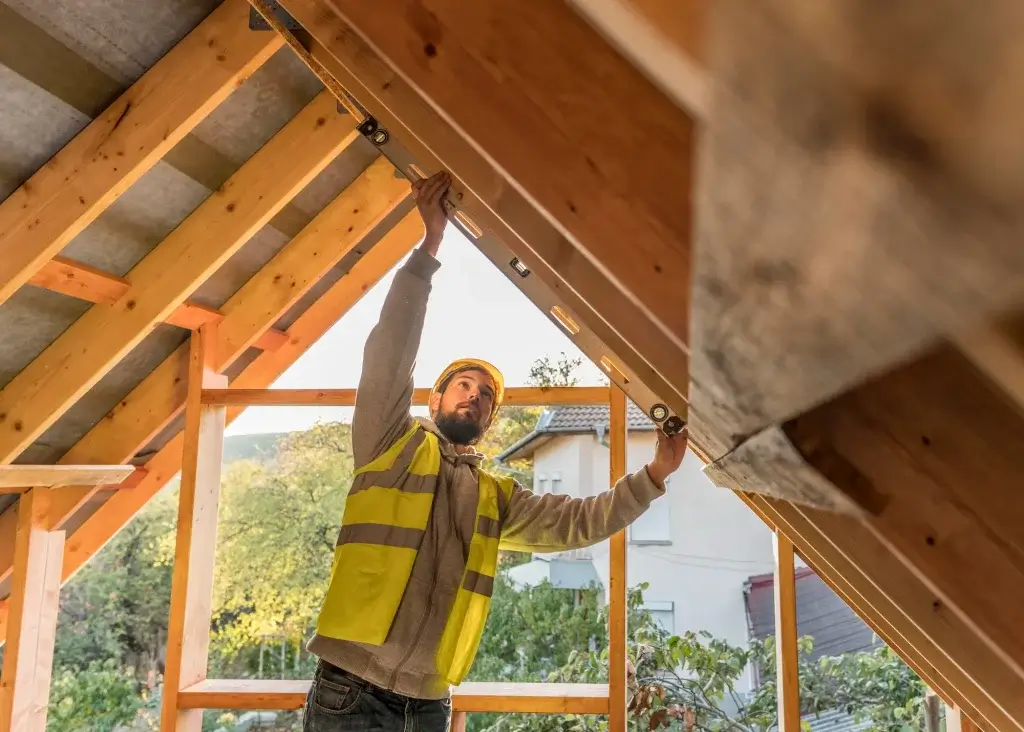
Key Factors to Consider When Selecting Roof Insulation for Your Building
Choosing the right insulation involves balancing several critical factors. You must consider the material’s thermal resistance (R-value), its ability to withstand moisture, its compressive strength (especially for foot traffic), and its fire resistance rating. Compatibility with your existing roofing system and local building codes are also non-negotiable considerations.
How To Choose Roof Insulation for Your Roof
To make the best choice, start by assessing your climate zone and building code requirements for minimum R-value. Next, evaluate the type of roof deck and membrane you have. Consider the building’s use—for example, a refrigerated warehouse has very different needs than an office building. Finally, weigh the upfront cost against the long-term energy savings and performance benefits.
How to Choose the Best Ceiling Insulation
While often discussed together, roof insulation and ceiling insulation can serve different purposes. For commercial flat roofs, the insulation is typically part of the roof assembly itself, installed above the structural deck. The “best” choice is the one that integrates seamlessly into this system, providing the required thermal performance and structural support for the membrane above it.
How Do You Know If Your Roof Needs Insulation?
Signs that your commercial roof may need new or additional insulation include excessively high energy bills, difficulty maintaining a consistent indoor temperature, visible moisture or frost on the underside of the roof deck, and ice dams forming at the roof’s edge in winter. An energy audit or an inspection by a professional roofing contractor can provide a definitive answer.
Understanding Roof Insulation Types
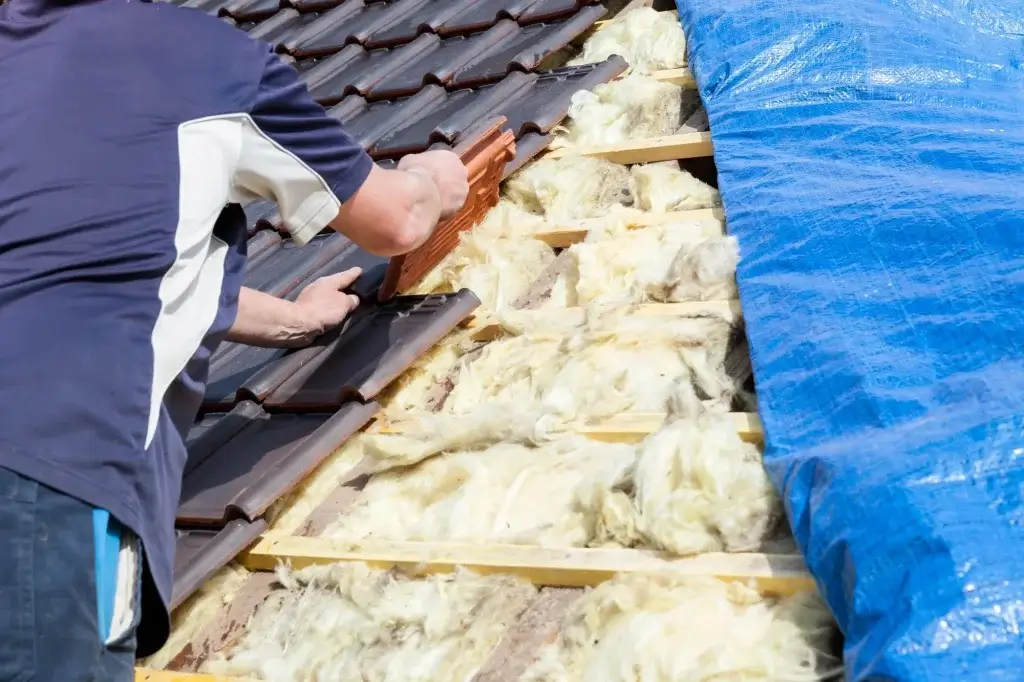
Our Top 8 Roof Insulation Types
The commercial roofing market offers a diverse range of insulation materials, each with unique properties. While many options exist, a few stand out for their performance and suitability in commercial applications. We will explore the most effective types in detail.
Understanding 7 Different Types of Roof Insulation
From rigid boards to spray-applied foam, the variety can be daunting. Key types include Polyisocyanurate (Polyiso), Extruded Polystyrene (XPS), Expanded Polystyrene (EPS), spray foam, structural insulated panels (SIPs), fiberglass, and mineral wool. Each has distinct advantages in terms of R-value, moisture resistance, and cost.
Residential Roof Insulation (Comparison Reference)
For comparison, residential applications often use materials like fiberglass batts or loose-fill cellulose in attic spaces. These are generally not suitable for commercial flat roofs, which require rigid, high-density insulation boards that can support the weight of the roofing system, equipment, and foot traffic while providing a continuous thermal barrier.
Popular Roof Insulation Materials for Commercial Roofing
1. Extruded Polystyrene (XPS) Insulation Boards
XPS is a rigid foam board insulation, typically identified by its blue, green, or pink color. It is known for its high compressive strength and excellent moisture resistance, making it a durable choice for commercial roofs. XPS provides a good balance of thermal performance and structural support.
2. Polyisocyanurate (Polyiso) Insulation
Polyisocyanurate, or Polyiso, is the most widely used insulation for commercial roofing in North America. It is a rigid foam board with a closed-cell structure, often faced with materials like foil or glass fiber. Polyiso offers the highest R-value per inch of thickness among all rigid foam insulations, making it an extremely efficient choice.
- EnergyGuard™ NH Polyiso Insulation
This product line represents a non-halogenated version of standard Polyiso, designed to offer a more environmentally conscious option without sacrificing thermal performance.
- EnergyGuard™ Polyiso Insulation
This is the standard, workhorse Polyiso board used in millions of square feet of commercial roofing. It provides excellent R-value and is compatible with virtually all roof membrane types.
- EnergyGuard™ Tapered Polyiso Insulation
Tapered systems are designed with a built-in slope, providing a simple and effective way to create positive drainage on a flat roof. This prevents ponding water, a leading cause of roof degradation.
- EnergyGuard™ Ultra Polyiso Insulation
This variant often features higher-density foam or premium facers to provide enhanced durability, impact resistance, and dimensional stability for high-performance roofing systems.
- EnergyGuard™ Ultra Tapered Polyiso Insulation
Combining the benefits of a tapered system with the enhanced strength of an “Ultra” product, this insulation is ideal for roofs that require both superior drainage and maximum durability.
- EnergyGuard™ Barrier Polyiso Insulation
These boards typically come with a specialized coating or facer that acts as an air and vapor barrier, providing an all-in-one solution for controlling heat, air, and moisture flow.
- EnergyGuard™ NH Tapered Polyiso Insulation
This product offers the environmental benefits of a non-halogenated formula combined with the crucial water-management function of a tapered design.
- EnergyGuard™ NH Ultra Polyiso Insulation
For projects demanding maximum performance and a better environmental profile, this product delivers high-density strength and a non-halogenated foam core.
- EnergyGuard™ NH Ultra Tapered Polyiso Insulation
This is the top-tier option, combining a non-halogenated core, high-density strength, and a built-in slope for the ultimate in performance, sustainability, and water management.
- EnergyGuard™ NH Barrier Polyiso Insulation
This combines a non-halogenated foam with an integrated barrier, offering an environmentally preferable choice for complete control over the building’s thermal and moisture envelope.
- Polyiso Product Benefits
The primary benefits of Polyiso insulation include its superior R-value, lightweight nature, and compatibility with most roofing systems. Its availability in tapered and high-density formats makes it exceptionally versatile for commercial projects.
3. Fiberglass Insulation Batts and Rolls
While common in residential attics, fiberglass is rarely used in commercial flat roof assemblies. Its soft, fibrous nature does not provide the compressive strength needed to support a roof membrane. It can, however, be used below the roof deck between joists in certain building designs.
4. Pointbond SBPP Insulation Rolls
Pointbond spun-bond polypropylene (SBPP) is not a primary insulation material itself. Rather, it is often used as a protective layer or slip sheet between insulation boards and a roof membrane, particularly in ballasted or mechanically fastened systems.
Ultra HD Composite Insulation
This is a premium product that typically combines a high-density Polyiso board with another material, like gypsum board, to create a composite panel. This provides superior fire resistance, impact protection, and dimensional stability.
Composite Boards
Composite insulation boards bond different materials together to leverage the strengths of each. A common example is bonding Polyiso foam to a perlite or gypsum cover board, creating a single panel that is easy to install and offers multiple performance benefits.
Vacuum Insulated System
Vacuum Insulated Panels (VIPs) offer an extremely high R-value in a very slim profile. They consist of a rigid core panel under a vacuum, sealed within a gas-impermeable envelope. While expensive, they are an excellent solution for applications where space is limited but high thermal performance is critical.
Insulation Adhesives
Proper installation requires the right adhesive. Low-rise foam adhesives are commonly used to bond insulation layers to each other and to the roof deck. These adhesives create a strong bond without penetrating the deck, minimizing thermal bridging and creating a more monolithic, wind-resistant system.
Technical Considerations
R-Values for Roof Insulation
The R-value measures a material’s ability to resist heat flow. The higher the R-value, the better the insulation. Building codes mandate minimum R-values based on climate zone, and achieving or exceeding these targets is key to an energy-efficient building.
What is the R-Value?
Specifically, R-value is the measure of thermal resistance. For commercial roofing, you look at the total R-value of the entire assembly, which includes all layers of insulation and other roofing components. Polyiso, for example, can offer an R-value of R-5.5 to R-6.5 per inch.
Estimated Costs & R-Value for Common Roof Insulation Types
- Polyiso: R-5.5 to R-6.5 per inch. Cost is moderate but offers the best value for performance.
- XPS: R-5.0 per inch. Similar in cost to Polyiso but with slightly lower thermal performance.
- EPS (Expanded Polystyrene): R-3.6 to R-4.2 per inch. Generally the least expensive rigid board, but requires more thickness to achieve the same R-value.
Factors That Affect Insulation Performance
The stated R-value of insulation can be affected by several factors. Moisture infiltration can drastically reduce performance. Improper installation leading to gaps or “thermal bridges” will create weak spots. Extreme cold can also temporarily lower the R-value of certain foam insulations.
Installation and Maintenance Tips
Protect Your Roof with Expert Installation
The performance of even the best insulation is dependent on proper installation. A professional roofing contractor ensures that boards are tightly butted, joints are staggered, and the entire system is properly secured and integrated with the roof membrane to prevent air and water leaks.
Common Mistakes to Avoid During Roof Insulation
Avoid creating gaps between insulation boards, as these become channels for energy loss. Do not allow the insulation to get wet during storage or installation. Ensure the roof deck is clean, dry, and smooth before installation begins. Finally, do not use fasteners that are too long or too short, as this can compromise both the insulation and the deck.
Maintenance Tips for Long-Term Performance
Regular roof inspections are key to maintaining your insulation’s performance. Check for signs of membrane damage that could lead to leaks. Ensure drains and gutters are clear to prevent ponding water, which can saturate insulation over time if a leak develops. Promptly repair any damage to protect the entire roofing system.
Frequently Asked Questions About Roof Insulation
FAQ About Roof Insulation
1.Can I add more insulation to my existing roof?
Yes, it is often possible to add another layer of rigid board insulation on top of the existing assembly during a re-roofing project, as long as the structure can support the added weight.
Choosing the Right Roof Insulation for Different Climates
In cold climates, a higher R-value is critical to prevent heat loss. In hot, sunny climates, a high R-value is equally important to block solar heat gain. The choice of facer on the insulation can also play a role; a reflective facer can help reduce cooling loads in warm climates.
How Roof Insulation Impacts Energy Efficiency
Proper roof insulation directly and dramatically impacts energy efficiency. By creating a robust thermal barrier, it can reduce a commercial building’s heating and cooling costs by 20-40% or more. This reduction in energy consumption also lowers the building’s carbon footprint.
Conclusion
1. Choosing the Best Insulation Type for Your Commercial Roof
The “best” insulation is the one that meets your building’s specific needs for thermal performance, durability, moisture resistance, and fire safety, all while adhering to your budget and local codes. For most commercial applications, Polyisocyanurate insulation offers a superior and well-rounded solution.
2. Cost vs Performance: Making an Informed Decision
While it can be tempting to choose the cheapest option, this is often a poor long-term strategy. Investing in a higher-performance insulation system will pay for itself over time through lower energy bills and reduced maintenance costs. An informed decision weighs the initial investment against the total lifecycle cost of the roofing system.
3. Final Thoughts on Roof Insulation
Roof insulation is not an expense; it is an investment in your building’s efficiency, longevity, and comfort. By understanding the different types of materials and making a smart choice, you can protect your asset, reduce operational costs, and create a more sustainable and valuable property.